The Road to Happily Ever After

by Melanie Hooyenga

When I was a kid, I gobbled up books like the Sweet Valley High series and anything by Judy Blume. I’d lose myself in the characters’ lives, imagining what it’d be like to kiss my one true love or figure out my life before going to college. But somewhere along the way, it became uncouth to seek out these books.

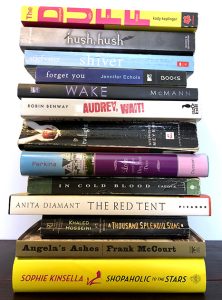
Sure, it was okay to read Jane Green or Helen Fielding, as long as the books that surrounded them on your shelves were deeper literary fiction. You know, REAL literature. If you were going to read a book on public transportation, Khaled Hosseini trumped Sophie Kinsella any day.

But I never stopped loving the happily ever after. I’ve read most of Nicholas Sparks’ books (and seen the movies) but those aren’t the novels I’d discuss with fellow book lovers. If books came up in conversation I’d name-drop the bestsellers of the day, but in the privacy of my home I’d devour Jennifer Weiner and Emily Giffin.

All that changed when I started reading young adult novels. While the plots are as varied as anything you’ll find in adult literature (and they certainly don’t all end happily), YA novels don’t shy away from the idea that things might work out in the end. Even in the darkest YA, there’s usually a glimmer of hope that while things may not end perfectly, they will get better. And I don’t know about you, but I could usually use a little hope at the end of the day.

Soon I discovered Stephanie Perkins, Lisa McMann, and shelves full of authors who don’t shy away from happiness, and I slowly stopped caring what other people thought of my reading choices. There have been countless articles arguing that YA lit somehow isn’t as good as adult lit, and while I won’t get into that debate here (although I think it should be clear where I stand), I think what really matters is that you read what you enjoy. If you love horror or thrillers or non-fiction adventures, read those! And own it. Don’t hide your true joy in a dark kindle. Life’s too short for that.

I still read the occasional adult novel — even ones without happy endings — but YA happily ever afters hold my heart and I’m no longer afraid to admit it.

Recipe for a Perfect Date

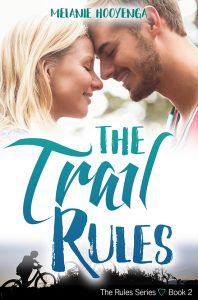
Welcome to the March edition of Ask the Sweethearts! Before we get to this month’s question, our February contest winner is (drum roll, please) Melanie Bracco, who receives a print edition of THE TRAIL RULES by Melanie Hooyenga, coming out March 9! From one Melanie to another … congratulations! Now for the question:

What is your idea of a perfect date?

Linda Budzinski: I heard the other day about a poll in which snuggling by a fire was ranked as the best date. I have to admit, that’s pretty good, especially if it involves hot chocolate with Kahlua and marshmallows, but for me, the perfect date involves getting out and doing something fun. This could mean Frisbee golf, putt putt, bowling, skating, darts (and have I mentioned I like escape rooms?). For Valentine’s day, I bought a curling lesson for my husband and me. We are both super excited to try it. It looks a little bit like bocci on ice, and we both love bocci! Hmm. Maybe afterward, there could be snuggling by a fire….

Stephanie Scott: To be honest, my date nights have increasingly become staying in to watch Netflix and order take out. While I love this, a night in is a bit lacking in adventure! I like the idea of being a tourist in your own town. I recently discovered an independent bookstore only a few miles from me that I never knew existed. Checking out a new restaurant, an art exhibit, or a park in a nearby area helps me appreciate where I live. Sharing that with a special someone is even better.

Melanie Hooyenga: My perfect date involves good food and drink, lively conversation, and excellent scenery. I live less than a mile from Lake Michigan, so it’s pretty much a requirement that a date includes either driving by the lake or walking on the pier, and since we’re also thirty minutes from Beer City USA (Grand Rapids, MI) there’s a good chance a brewery will be involved. But really, the more I can be outside, the better, so a picnic near the lake is my ideal. Recently, my husband and I were at a brewery and pretended we’d just met, so when we went to dinner afterwards we acted like it was our first date. We asked all the getting-to-know-you questions that you take for granted once you’re married, and it was fun experiencing the butterflies I often write about but haven’t experienced in years.

Karole Cozzo: Coming off of a Disney trip (with kids), I think a pretty perfect date would be an evening in the World Showcase at Epcot. Margaritas in Mexico or lager and a soft pretzel in Germany to start the night, dinner in Italy, and a late night stroll through France, complete with a stop at L’Artisan des Glace for gelato or an ice cream martini to cap the night. Right now, with warm breezes and the flower and garden festival going on, I can’t think of a better evening — a date where you get to travel the world in a single night!

Robin Constantine: Hmmm…I love going to the movies, but I think for a date it would be better to do something active like hitting the boardwalk at the Jersey shore to play games, sample the food, sit on the beach and take in the sunset and people watch or go for a hike in a local park, maybe even one with a little bit of history — some activity that is conducive to shared experience, to take the pressure off “having to talk,” like if you were sitting across from each other at dinner. Nothing like an awkward silence to kill the romance!

Erin Fletcher: My perfect date (besides April 25th, of course … bonus points if you get that reference!) would be a new experience. Something like visiting a new art museum, taking a cooking class, or exploring a hiking trail. New experiences always lead to great conversation, learning about each other, and having a lot of fun. And if the date can somehow include coffee and/or ice cream, that would be even better!

What is your recipe for a perfect date?

Contest: The Rules of Love

We were so excited to welcome Melanie Hooyenga this month to the Sweethearts of YA site, and we are even more excited for the March 9 release of THE TRAIL RULES, the second book in her RULES series.

To celebrate, Melanie has offered to give away a print copy of the book (U.S. only) to a randomly selected winner. All you have to do to enter is leave a comment sharing one of your non-negotiable rules of love. What makes or breaks the deal for you? Bonus entry: Tweet a link to this post using the #SweetheartsofYA hashtag!

The contest ends at noon on 2/28; winner will be announced 3/1. Good luck! xoxoxo

Gloria Chao: Hugs, Cakes, and Panda Plates

Congratulations to this month’s guest author, Gloria Chao, whose debut novel, AMERICAN PANDA, released last week! In this YA romance — called “effervescent” by Publishers Weekly — 17-year-old Mei Lu’s parents want her to become a doctor and marry a Taiwanese Ivy Leaguer. Two problems: Germs freak her out, and dreamy Darren Takahashi is not Taiwanese. Ah, forbidden love! 

How did you come up with the idea for AMERICAN PANDA?

I wrote this book when I switched careers from dentist to writer and was having a hard time communicating with my parents. I wanted to write the book that I needed in that moment and also the book I needed as a teen. Just like my protagonist, Mei, I had a different vision for my life than my parents, and I needed to find the strength to pursue my dreams and communicate with my parents.

How did you find your agent and publisher? Was your manuscript an overnight success, or did you have to deal with a lot of rejections/revisions?

It took me a little over a year (and many, many rejections) to find my wonderful agent. I rewrote the book so many times because of the college setting and queried 3 different versions of the manuscript. After revising a few rounds with my agent, we went out on submission and sold the book in a week!

What is the significance of the title? Did you come up with it, or did the publisher?

AMERICAN PANDA represents Mei’s struggle with her identity, and the font on the cover even shows how they are in conflict with each other. Mei also starts the book with a black-and-white world view, and through the course of the book, she begins to see the gray. Hence the book’s tagline, “Unlike the panda, life isn’t always so black and white.” There are also references to pandas in the book.

I came up with this title, and I’m thrilled that Simon Pulse loved it!

You were once a black belt … what could kung fu teach you about writing?

Kung fu taught me to grit my teeth to push through the pain. Also, the more I practiced, the easier it became. Both of these are very applicable to writing! And fun fact: my second book’s protagonist is a martial artist!

How did you celebrate your release?

I was honored to have visited South Elgin High School the morning of release to hold a writing workshop and give a presentation. The rest of the day was my husband and I driving around to Targets, indie bookstores, and Barnes and Nobles to sign stock!

It was surreal seeing my book on the shelves, and I’m grateful to have been able to share the moment with the person who helped me discover my love of writing. There was a lot of driving (and singing at the top of our lungs), and then that night we celebrated with a launch party at Anderson’s Bookshop! There was laughter, hugging, cake, and panda plates, and I couldn’t have wished for anything more. I am also so grateful for the love that AMERICAN PANDA received on social media that day! Thank you, everyone, for making my launch day so special!

What’s next?

I’m currently drafting MISALIGNED, which will be out fall 2019 with Simon Pulse. The book follows a teen outcast, Ali, who is the only Asian in her small, predominantly white Midwestern town. The book explores racism and prejudice, and when another Asian family moves to town, everyone believes Ali and the other Chinese boy belong together. Despite her initial resistance, she begins falling for him, only to learn that her mother forbids them from being together. As Ali searches for the reasoning behind her mother’s disapproval, she unearths dark family secrets that threaten her future.

Ah, who doesn’t love family secrets? And more forbidden love? Okay, on to the speed round!

  • Alpha males or sensitive types? Sensitive Types 110%
  • Morning glory or night owl? Night Owl 1,000%
  • Tropical island or mountain getaway? Ooh, tropical island relaxation.
  • French fries or cookies? COOKIES!!!!!
  • High heels or flats? Flats—I am all about comfort over style.

Thank you for visiting us, and enjoy the rest of your debut month! Readers can connect with Gloria here:

Website * TwitterFacebookInstagram * Goodreads

Gloria Chao is an MIT grad turned dentist turned writer. She currently lives in Chicago with her ever-supportive husband, for whom she became a nine-hole golfer (sometimes seven). She is always up for cooperative board games, Dance Dance Revolution, or soup dumplings. She was also once a black belt in kung-fu and a competitive dancer, but that side of her was drilled and suctioned out. American Panda is her debut novel, and Misaligned is forthcoming fall 2019.

Everything Old is … Just Old

by Robin Constantine

One of the challenges of writing contemporary young adult is the ability to keep things fresh, current. Use a word or an action that’s out of date, and you’ll be sent down a shame spiral, or worse, called…old. And yet, if you use tech or slang that is too current, too new — you risk the chance of it being considered antiquated by the time your book comes out. What’s a YA writer to do if you don’t want your story to be as outdated as MySpace?

Before you order that crystal ball from the Internet, here’s a handy guide to things that teens of today might not know existed (or are on their way to extinction.)*

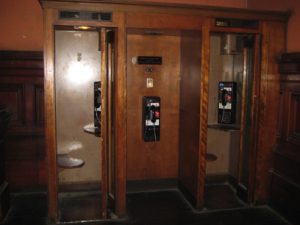
Phone Booths/Pay Phones. Remember these? Claustrophobic, right? Also, oddly mysterious and sometimes romantic. Granted, they were old when I was a teen, but the boys’ high school on the opposite side of town** was equipped with a wooden phone booth like the one pictured here. Once you closed the glass door behind you and the light came on, all you needed was a quarter and the number of your crush to escape for a few moments of flirty talk. (And okay, I’m partial since this did in fact happen to me during a basketball game — except he called me, no quarter necessary, so unlimited time!! 🙂 )

There’s actually more than just the advent of cell phones that lead to the demise of the phone booth/pay phone! Apparently, they were very conducive to criminal activity.

Also … I’ll try not to think of all the germs I was probably exposed to … blech, not to mention the broken heart when said crush fizzled out.

Passing Notes in Class. You think sending a clandestine text is hard? That’s nothing compared to the slight of hand required to pass a note. First, one must write said note … then fold it silently … then …the actual passing. What if your friend was across the room?

Was there a chain of people you could actually trust to pass it? Could you risk tossing it while the teacher had their back turned to write something on the chalkboard?***

Bonus points if your note contained some boxes that needed to be checked — then there would have to be a return. Oh the anxiety!

And if it ever got into the wrong hands … plot twist.

Mixtapes. Someone actually taking the time to record songs, in a specific order on a blank tape and dedicate it to you? Ah, be still my heart. This took effort. Mixtapes could be
friendly, or I’d like to be more than friendly, in a very non-threatening way. Is there a
better way to get to know someone than sharing music? What made it even more
intimate was the personal touches – hand writing the song titles in bubbly blue
inked letters on the little blank insert in the cassette and throwing in a song like
Personal Jesus to keep the recipient guessing your intentions.

Is there even a modern day equivalent? Somehow, a Spotify list doesn’t seem as
substantial.

Lockers. I know … how can this be? Watch any teen movie or show and I guarantee there’s a scene by a locker. It’s the perfect place to have a reflective moment, to find an anonymous note, to have a romantic convo with the one-hand-against-the-locker-lean move, to find out you’re not invited to THE party…

…and yet, with the advent of classroom Chromebooks and online text books, these too are becoming obsolete. Some schools are even getting rid of them so there’s more space. But what do kids do with all their stuff? And what about all that cute paraphernalia to decorate it? Will the locker chandelier be obsolete soon too?

Has anyone ever used one of those?

Bonus Lightning round:

Waiting for an arcade game — Remember walking up to Ms. Pacman and placing your quarter down to show that you were next? Um, yeah, me neither. Who needs to do that when you have an arcade in the palm of your hand?

Photo booths in the wild — No, not the ones with props that you can rent for a Sweet Sixteen. The old, old kind that made all sorts of noise as your pictures developed and how you would have to handle the photo strip very carefully since it could still be wet. There was no retake, unless you wanted to fork over the cash. No Facetune app if you had a zit or a crooked smile. This was a one and done. (And fun since if you were taking it with another person you had to get super, super close to fit into the frame of the picture!)

While this list makes me slightly nostalgic, I think there are great new ways to incorporate modern tech into your plot and setting. Out with the old and in with the texting, Skyping, and selfies!

*unless of course you are writing historical fiction, then ignore…

**I went to an all girl high school, our brother school was on the opposite side of town … talk about antiquated.

***which is also disappearing in favor of dry erase and smart boards!

Have I forgotten anything? What would you add to this list?

Sweet … and Tough

Before we get to this month’s “Ask the Sweethearts” question, we have a few major announcements.

First, we are very sorry to say goodbye to Darcy Woods. She is the sweetest of sweethearts, but as she mentioned in last month’s column, she has made a commitment to take care of herself and cut back on her obligations this year, and sadly for us, that includes her participation here. We know you all will want to keep up with Darcy and her books, so be sure to follow her on Twitter and Instagram and Goodreads.

On a happier note, we are super excited to welcome Sweetheart Melanie Hooyenga to the site! Melanie was our first ever guest author and is author of the very fun YA contemporary romance “Rules” series.

Finally, a huge congratulations to Melanie on the March 9 release of the second book in her “Rules” series, THE TRAIL RULES, and to Sweetheart Karole Cozzo on the May 15 release of her new novel, THE GAME CAN’T LOVE YOU BACK. Both are available for pre-order, so be sure to check them out!

Now, on to our question: “When the going gets tough, what gets you going?”

Melanie Hooyenga: I’m anxious by nature and always tend to have 15-too-many things going on at any given time, so when push comes to shove, I find making a list and prioritizing what REALLY needs to get done helps me stay focused. Being able to look at actual deadlines and know what order I need to do things makes it all a bit more manageable. But I’ve also learned to recognize when something has to give. Sometimes it’s cleaning the house, other times it’s exercising — but when the only way to get through my to-do list is to scribble a few things out, that’s what I do. Then I make sure to take a moment to celebrate before starting all over again.

Robin Constantine: Radical self-care — and not just as a reward but as needed. I can’t take credit for that term — that’s from Anne Lamott. For me it means slowing down, getting quiet and figuring out what I need in that moment to help me get over a creative hurdle. Sometimes it’s blowing things off and going to the movies or for a walk or taking a bath or doing something I’ve always wanted to do — like baking macarons! Anything that gets me away from writing for a while. If I let my mind relax into an activity where there’s no measuring my “success,” I always come back to a project with fresh eyes.

Stephanie Scott: There are a few kinds of tough in my eyes: the real-life-is-invading-all-of-my-creative-spaces and then zero artistic motivation. I’m currently battling both! When it’s a life issue getting in the way of my writing, I go back to my planner and get organized. What can I schedule, what can I set aside, what is easy that can be checked off today? When I lack motivation, that to me is trickier than just being busy. I tend to go back to what I wish I had time for when I’m too busy: cooking, art projects, or exploring my neighborhood. I like to play video games, and often don’t because it’s such a time suck. Sometimes that break can be really refreshing. Usually what gets me going again after a creative break is to read a really good book — not just a good book, but the kind of book that reminds me why I love stories in general.

Erin Fletcher: When the going gets tough, there are many things that get me going (including escaping between the pages of a good book in a bubble bath with a glass of wine). But the one that works best is to do something for someone else. Sometimes I bake cookies for a friend or volunteer at my church. Other times I send a hand-written “just because” card to a family member. Or go shopping for groceries to donate to a food pantry. Or find a Donors Choose project to support. Or offer to babysit for an overwhelmed single mom. The possibilities are endless, but one thing is for sure: When I focus on meeting the needs of someone else, my tough going goes right away!

Karole Cozzo: Wow, I don’t know if an answer has ever announced itself so instantaneously in my head! What keeps me going … what gets me going, when I feel like I could throw in the towel is most definitely my writing pallies. I can’t imagine what the writing endeavor would feel like without the supportive, reassuring, positive, and motivating writers’ community that I’m a part of. This group of people is always willing to listen to fears, anxieties, frustrations, and disappointments. They don’t always have the answers, but they certainly can provide understanding and perspective. There’s next to nothing that an author goes through that hasn’t been experienced by another author, and sometimes you just need to hear you’re not alone and be reminded how tough this business can be. My writing friends understand this in a way that only fellow authors can. They’re my sounding board, my punching bag, my cheerleaders, my rays of sunshine.

Linda Budzinski: Usually for me, life and writing get tough when I feel overwhelmed and have too much going on. If I’m being honest, my typical reaction is denial, followed by another dose of denial, followed by a whole lot more denial. When I finally get to a breaking point, I have to step away from it all and give myself a break. This can mean binge-watching a reality show on Bravo or a trip to Burlington Coat Factory or an afternoon spent browsing through my magazine pile.  Usually, that break is enough to clear my mind and make me more productive when I get back to my “to do” list. And often at that point I’ll realize there is one specific item on my list that has led to the feeling of being overwhelmed — something I’ve been avoiding. That is the one thing I need to tackle first, and then everything else falls into place.

How about you? When the going gets tough, what gets you going? Tell us in the comments!

Patricia Tighe: Bringing the Swoon

Welcome to Patricia Tighe, our first guest of 2018! Patricia is author of LIFE IN THE NO-DATING ZONE, LIFE IN THE LUCKY ZONE, AND LIFE IN THE DANGER ZONE (yes, you guessed it, that’s a series!). Her newest novel, ABOUT LAST SUMMER, is about a girl who assumes a fake identity on a dare, which is all fun and games … until she runs into the boy she dated (you guessed it again!) last summer!

What gave you the idea to write this novel?

For ABOUT LAST SUMMER, I was playing around with the idea of secret identities and what might happen if someone showed up who knew who you really were. And what if that someone happened to be your ex? From there it was just a matter of putting my couple in a setting where they couldn’t get away from each other.

How many books have you written, and how many have seen the light of day?

I’ve completed nine books — two middle grade that will probably never see the light of day, two YA fantasy novels that I still might do something with, and five YA contemporary romance novels published by Swoon Romance. Four are out now and the fifth will be out this Spring.

What types of characters are your favorite to write?

I love writing characters that make me laugh. If I can have at least one character that’s a little bit nuts or unusual, I’m a happy writer. It may be that I’m the only one who laughs at that character’s wit, but I still enjoy it.

Kissing scenes: Do you find them they easy or more challenging to write?

I’ve always found kissing scenes challenging to write, not because of the actual physical aspect but because of the emotional component. It’s so important to get that right. Well, at least as right as possible. There’s give and take and character growth to take into consideration. And within all that, you have to bring the swoon!

How did you find your critique partners?

The majority of my critique partners came from the time I spent at Seton Hill University where I earned a master’s in Writing Popular Fiction in 2008. Having worked together for so long, I know I can trust them. Each individual will point out a different aspect in my work that I need to address. It’s wonderful.

What is a typical comment you’d get from your critique partner?

Ha! In almost every manuscript I’ll see: “You’ve got a cluster of passive sentences in that paragraph. Maybe rewrite.”

Ah, yes. Active sentences are definitely better! And on that note, let’s move to the speed round!

  • Alpha males vs. sensitive types: Sensitive types with a sense of humor!
  • Red roses vs. blue violets: Blue violets.
  • Morning glory vs. night owl: Night owl. And I always live to regret it.
  • Tropical island vs. mountain getaway: Tropical island in the shade.
  • Wizards vs. vampires: Wizards!
  • French fries vs. cookies: Cookies. All the cookies.

Thanks so much for visiting our blog, and please, please keep bringing the swoo! Here’s where fans can find Patricia:

Website * Twitter * Instagram

The mother of two grown sons, Patricia B. Tighe lives in West Texas with her husband and dog. She eats way too much pizza, drinks way too much coffee, and watches way too much NFL football. On the bright side, she also reads and writes teen fiction. She promises to include as much romance, angst, and adventure as possible in her books.

Do You Really Need a Literary Agent?

by Karole Cozzo

Back in 2005, I completed my first manuscript. I was jazzed to learn that I could, in fact, accomplish such a thing, that I could take a story from start to finish without getting bored and starting something new or bowing out because I felt overwhelmed or lost along the way. I started Googling “how you get a book published” and quickly realized (especially back then), that querying and finding a literary agent was a necessary first step in the process, especially if an author had any hope of being considered by well-known publishing companies.

Fast forward to 2018. I’ve sold four books to a Macmillan imprint since 2014, and I still don’t have a literary agent. Through the Swoon Reads website and community, I sold my first novel, and I’ve sold my subsequent novels to Swoon Reads through direct contact with the directors and editors at the imprint.

Beyond Swoon Read’s crowdsourcing approach to book selection and publication, there are several other options for selling books without the assistance of an agent, including self-publishing and smaller publishing companies that are willing to consider manuscripts without the divine intervention of a literary agent. It’s definitely possible to see your work published — in electronic format or on the shelves of brick and mortar stores — without agent representation, but what are the advantages of having a person working on your behalf? I questioned some of my author pals, those with representation and those without, about the positives and negatives associated with the agent search in launching and sustaining publishing careers. Here’s some of what I heard:

The Benefits of Going it Alone . . .

  • Complete control, creative or otherwise. Sometimes, agents request one or more rounds of edits before they’re comfortable submitting your work to a publishing company. It’s likely that if a story is acquired, editors will request additional edits before publication. By this time, your novel may bear little resemblance to the story you initially imagined. These changes may be based on expertise and market knowledge, but some authors are uncomfortable or unhappy with the number of changes that may come along with having an additional person weigh in on his or her work.
  • Increased industry knowledge and opportunities for self-advocacy. When you represent yourself, you have to do the research in order to feel comfortable and confident that you’re doing it right. Instead of relying on someone else to manage your career, the responsibility is in your hands. This provides increased motivation for an author to learn all he or she can about how the industry works, contract nuances, etc. When you’re the sole person working on your behalf, there’s the impetus to become as knowledgeable and informed as possible, and there is complete transparency about contract negotiations, conversations with publishers, and career planning that might not come along with having someone speaking for you.
  • If and when you sell a book, you get to keep all the money! When you’re your own agent, that 10-15% cut goes right to you.

. . . and the Downside

  • You don’t necessarily know what you don’t know. This is probably my greatest concern in going it alone. I don’t necessarily know what’s typical or fair in the industry, and I can review contracts and royalty statements until my eyes cross and still not feel 110% confident that I understand everything I’m reading. There are definitely times I’d love to have someone else to bounce my questions and concerns off of. There is always a lingering fear that I’m missing something really important that an agent would alert me to immediately.
  • Most big-name publishing companies aren’t willing to review your manuscript without it being presented by a literary agent. This is a big one if you’re hoping to reach as broad an audience as possible and one day hold an actual bound copy of your book in your hands.
  • Who do you turn to for career guidance? Maybe you’re looking at branching out to another genre, maybe you want to know if the idea for your new novel is “so yesterday” based on market trends. Maybe you want someone to help you develop realistic and attainable career goals. Without an agent, a lot of this feels like guesswork (trust me), and even if you’ve developed a relationship with a publisher, as you attempt to grow your career, it can be difficult to know what steps are best to take to actually do so.

The Benefits of Having an Agent . . .

  • Advocacy. Several of my writing pals quickly noted that their agents are worth every cent they get, simply because it’s worth it, 10 times over, to feel like there’s someone in their corner and someone looking out for their best interests. One author friend mentioned truly believing “he wants to sell my book as much as I do.” It was also noted that an agent may be working on your behalf even when you don’t hear from him or her, coming up with new plans or ideas to be shared. They may be your biggest cheerleader and your most loyal teammate; as one author friend put it, “they’re not succeeding unless you are.”
  • Contract review and negotiations. I’ll be blunt — attempting to read a publishing contract is like attempting to read Latin. Maybe Chinese, because I often feel like I don’t even recognize the characters! Several of the authors I spoke to mentioned how valuable an agent can be when it comes to contracts. They noted that agents caught things and asked for concessions on points they never would’ve thought of on their own. While agents don’t usually get everything they ask for, they often can get publishers to budge on a few points that you wouldn’t have known or thought to ask for.
  • Contacts. They have connections with those working at the big-name companies. Beyond getting a publishing company to review your work, previously established relationships can make that much easier.

. . . and the Downside

  • That whole sharing your profits thing. Ah yeah … you have to do it. It’s typical for new authors to not earn out on their first books, which means a portion of your advance — maybe the only money you’ll ever see that is often taxed heavily — goes to someone else.
  • Like any other profession, there are good agents and there are bad agents. I’ve heard horror stories about unresponsive agents, agents who disappeared off the face of the earth entirely after signing an author, agents who rarely updated the author on submissions or if submissions were being made at all. It can feel like the process is out of your hands, and if you’re not entirely gelling with your agent, a relationship that seemed like a dream come true can end up leaving you unfulfilled, feeling like your career is being handled by someone you might not have total trust or confidence in.
  • It’s really hard to get one, and the query process can be (okay, let’s just say always is) nerve-wracking, frustrating, and disheartening. Rejection from agent upon agent upon agent can really shake an author’s confidence. An agent I follow on twitter recently shared the following: “I just organized my inbox, so some #querystats! I was open to queries for 9.5 months last year. Here is what that looked like: 3, 615 queries received; 89 fulls requested from queries; 124 fulls (or partials read); 4 clients signed.” I’ll do the math for you — in this case, .01% of her queries resulted in an author being signed. These odds can feel downright debilitating, right? While it’s true that most big-name authors can tell tales of the hundreds of rejection emails they received, it’s extremely hard to take these emails in stride and keep going. If rejection emails shatter a writer, he or she may give up entirely on their dream.

Here’s the bottom line: It is indeed possible to become a published author and advance your writing career without a literary agent. It’s up to you as a writer, upon considering the pluses and minutes of having one, to decide how much time, energy, and angst you want to invest in the query game, to decide if the benefits outweigh the negatives of having an agent working on your behalf.

2018, Here We Come!

Happy New Year! As we look forward to 2018, this month we answer the question: What are your goals for this year (writing/publishing or otherwise)?

Erin Fletcher: One of my goals for 2018 is to read more! For a lot of 2017, I replaced reading with things like my day job, watching YouTube, and scrolling through BuzzFeed. The result? I miss reading! I have a large stack of books (okay, fine, I have a few large stacks of books) just waiting for me, and I can’t wait to dive into them! I think I’ll make my first read of 2018 a book from one of my fellow Sweethearts … leave a comment below if you have a suggestion for a Sweetheart book you’ve loved!

Stephanie Scott: My aim is to finish up two YA manuscripts in progress to pitch to publishers. My goal is to turn them in to my agent in March. I spent part of New Year’s Day setting up my 2018 planner and breaking down the tasks of what needs to be done and by when. I don’t get super detailed, but general deadlines and goals along the way help me a lot. I’m also venturing into romance for adult readers and am planning a self-publish launch as part of a group series. This has a spring timeline too. The second half of 2018 is wide open with possibility!

Linda Budzinski: In December, I started back to work full-time with a new job that is going to require a lot of travel. There are lots of aspects of the job I’m excited about, but travel is NOT one of them. I like being home with my husband and sleeping in my own bed. I tend to see travel as a hassle and a major stress-inducer. So, my goal is to figure out how to turn that around. I want to adjust my attitude and learn to enjoy my work trips. And I NEED to figure out how to keep my writing on schedule while I’m  on the road! (And if anyone has thoughts on how to do that, I’d love to hear them!)

Darcy Woods: For the past few years, I’ve said YES to virtually all the invites and opportunities that have come my way. So when 2018 rolled around, I decided to declare it the Year of NO! That doesn’t mean I’ll say no to everything, or that I regret the years of yeses — not by a long shot! They’ve led to so many unforgettable experiences, expanded horizons, and lasting friendships. I’ve just come to recognize the Yes Years are not infinitely sustainable for me. (Egads, I’m human after all!) Time might be one of the most precious gifts we can give ourselves. And with 2017 being an especially tumultuous year, I intend to do just that!

Robin Constantine: I spent most of last year trying to find the joy in my writing. It took some effort and many stops and starts, but I did find it again. Now I want to keep fanning those creative flames. In the past I’ve always worked on one project, taken a break, then started something new. My goal in 2018 is to always be working on something. I’d also like to write something out of my comfort zone — which may for my eyes only, but who knows, sometimes when the goal is to have fun you find some gems!

Karole Kozzo: I hope to accomplish one of my big personal goals next month in Orlando by completing the Disney Princess Half Marathon, which will be my first half marathon attempted. I’m aiming for a respectable time (that might mean something different to me than to serious runners, I admit!) while still having fun and making sure to stop and smell the Dole Whip and snap pictures with some characters. And I have several writing goals! I’m hoping to sell my fifth YA romance manuscript. I would love to finish a WIP in time for Pitch Wars (but if not this year, then next for sure). I’m hoping to branch out a bit beyond romance, which feels challenging and a bit scary for me, but also exciting. Any story I write will have some romantic elements for sure, but I look forward to pushing myself when it comes to structure and plotting. Happy New Year, everyone!

What are your goals for 2018? Tell us about them in the comments! xoxoxo

Cheyanne Young: Writing A Novel in 30 Days

Happy Holidays! We are super excited this month to welcome Cheyanne Young as our guest author. Cheyanne is the author of … well … a LOT of novels, including her most recent YA romance, THE BREAKUP SUPPORT GROUP. She joins us here to talk about her newest project, THE LAST WISH OF SASHA CADE, which releases from KCP Loft in the fall of 2018 and which involves a glitter-painted coffin; a long-lost brother; a statewide scavenger hunt; a newfound love; and a very, very, very BEST best friend.

What gave you the idea to write this novel?

THE LAST WISH OF SASHA CADE came to me in a very poetic and magical way. I remember it very clearly … I was pacing around the living room trying to think of a new book idea, and I said, “I want to write a book about two best friends who are very close and loyal and don’t have any drama between them.” To which my teenage daughter said, “Knowing you, Mom, you’ll probably kill one of them.” And BAM. An idea was born. (Told you it was magical.) Although Sasha dies in the book, I still kept my main idea of two best friends who were loyal to each other until the end.

What do you hope readers will take away from your story?

While there is a pretty heartwarming gooey mushy love story in SASHA, I think the overall story is about friendship. The real kind, the ride-or-die, BFF, ovaries before brovaries, best friend friendship that you’re only lucky enough to have once or twice in your life. That true love exists within these friendships and that even when someone is gone, they’ll always be with you.

What’s your writing process? Are you a plotter? Pantser? Plotser?

I am 100 percent a plotter. I plot to an obsessive, ridiculous level that probably no one should ever do. But I’m also the person whose clothes are arranged in ROYGBIV color order in my closet, so what can I say? I’m organized. My outlines are very detailed, down to each scene and chapter, and are usually around 8,000 words each. But, I find this is perfect for my writing process because I’ll spend a week or two outlining the novel, working out the plot kinks in my outline, and then everything is so put together I’m simply transcribing the story that’s in my mind.

This is how I famously write all of my novels in 30 days or less, and I love my process. But with that said, I always urge writers do try their own thing. I’ve tried pantsing, I’ve tried plotting, and everything in between. What works for some authors won’t work for others, so keep switching it up until you settle into your groove

Do you have any tips for beginning writers?

Read all the time. Read in every genre (at least once). Read writing craft books, but only take the advice that speaks to you — ignore the rest. Learn basic punctuation and grammar. Then write without expectations. Know it’s going to suck for a while before you get any good.

Also, while you should embrace social media and have fun with it, DON’T LET IT CONTROL YOUR LIFE. Book Twitter and Bookstagram are so much fun and yet so soul crushing. Everywhere you turn, there’s another book deal announcement, a NYT bestseller, an aspiring author signing with your dream agent. Don’t let it get you down. Do your thing, be kind always, and trust in your writing journey.

Tell us about your most memorable fangirl moment. Who did you meet?

OH MAN. I got to meet Sarah Dessen. I almost cried when she walked out. I blabbered like a total idiot when she signed my book, and I told her that she was the author who inspired me to start writing about 10 years ago, that my daughter was named after a character in her book, and that I recently signed my first big book deal. I told her I wanted to thank her, and she said, “I appreciate it so much, but remember that YOU are the one who wrote the book that got a deal. You deserve to the credit, not me.” ISN’T SHE AMAZING? Check out this shot of me being a total fangirl, and my daughter, whose sarcasm inspired my new book.

How many books have you written, and how many have seen the light of day?

Do you have a calculator?

  • 4 self-published books
  • 4 traditionally published books
  • 2 self-published books I unpublished and deleted (because they sucked)
  • 1 more traditional book coming next year (THE LAST WISH OF SASHA CADE)
  • 3 manuscripts I queried then tossed
  • 16 (SIXTEEN!) manuscripts that will never see the light of day
  • 1 manuscript my agent and I decided sucked too much to submit
  • 1 manuscript I just finished writing (and hope will be published!)
  • And countless half-written abandoned stories that will never be resurrected because sometimes you think you’re a good writer and you totally, definitely, aren’t.

Holy wow! That’s impressive. Guess that’s what happens when you figure out how to write a book in a month! Let’s get to the speed round, shall we? You should be really, really good at this!

  • Alpha males vs. sensitive types: Can I have a mixture of both, please?
  • Sweet vs. savory: Savory… no sweet… NO SAVORY!
  • Morning glory vs. night owl: I sleep about five hours a night, so both
  • Tropical island vs. mountain getaway: Give me the mountains!
  • High heels vs. flats: Flats!
  • Ziplining vs. snorkeling: Ziplining
  • Friday night vs. Sunday morning: Friday night

Well, the five hours a night helps explain a lot, too! Thanks so much for popping in, and all the best to you in 2018! Here’s where readers can find Cheyanne:

Website * Twitter * Instagram

Cheyanne Young is a native Texan with a fear of cold weather and a coffee addiction that probably needs an intervention. She loves books, sarcasm, and collecting nail polish. After nearly a decade of working in engineering, Cheyanne now writes books for young adults. She also runs a bookish Etsy shop. Cheyanne lives near the beach with her daughter and husband, one spoiled rotten puppy, and a cat that is most likely plotting to take over the world.